The Second Harvest: What Small Cider Houses Do With Pomace, Yeast and Prunings
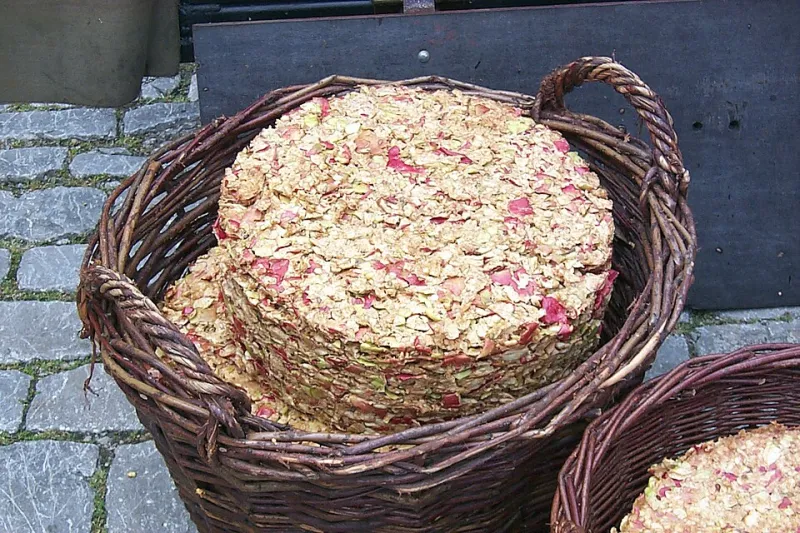
Photo: Craig Wyzik from Olympia, WA, USA, CC BY 2.0, via Wikimedia Commons
In a cider house, the apple is only the first act. After the press has done its work, there is a heap of pomace, a barrel of spent yeast and an orchard waiting for its winter haircut. None of it is glamorous. All of it is part of the story. The best small makers treat these leftovers not as waste but as the second harvest – a set of materials that still have somewhere to go.
That is not a new idea dressed up in green language. Mixed farms have been returning apple waste to soil and livestock for centuries. What is changing is that more drinkers want to know how it works, and more small cider houses are finding practical ways to close the loop without pretending the loop is always simple.
Pomace is not rubbish; it is a wet problem
Pomace is what is left after apples are crushed and pressed: flesh, skin, core and pips. It is wet, sweet and full of pectin, which makes it brilliant for some things and awkward for others. Left in a heap, it can sour quickly and attract wasps. Handled well, it is a resource.
The most common route is back to the land. Small makers spread pomace as mulch around young trees, compost it with woodchip or straw, or send it to a neighbouring farmer for livestock feed where the rules allow. The pattern repeats across the UK: a Herefordshire maker sends pomace to a local beef herd; a Somerset cider house composts it with hedgerow cuttings and returns it to the orchard; a Suffolk grower trials dried pomace as a soil conditioner. None of these are magical solutions. They are farmyard common sense, done carefully.
Pomace can also become pantry goods. The pectin in apple waste is useful for setting jams and jellies. Cider makers with a commercial kitchen sometimes press pomace for extra juice, dry it for apple leather, or turn it into vinegar. At home, the same principles apply at a smaller scale – more on that below.
Spent yeast and the sticky question of waste
After fermentation, yeast settles out as a soft, pale lees. It is rich in nitrogen and organic matter, which makes it useful in compost, but it can be messy and smelly if it is tipped down a drain in quantity. Most small cider houses let it settle, then add it to compost heaps in thin layers, spread it on land, or pass it to a local grower.
It is not the sort of thing a drinker needs to worry about over a pint, but it is a fair question to ask a maker you like. A good answer will be practical rather than poetic: it goes to the compost, it goes to the field, it goes to a digester, or it goes away with a licensed waste contractor. All of those can be responsible. The red flag is a shrug and a hosepipe.
Prunings: the orchard’s annual haircut
Winter pruning produces far more material than most people expect: thin whips, thicker branches, twiggy brash. On a small orchard, this is a useful harvest. Shredded prunings become mulch or path woodchip. Larger pieces can be dried for firewood or turned into biochar. Brash piles left in quiet corners give invertebrates and birds somewhere to shelter. Some makers weave prunings into hurdles or use them as kindling for the cider-house stove.
The key is to think in layers. A tidy orchard is not always a wildlife-friendly orchard, and a scruffy corner is not automatically a waste ground. The best small cider houses leave a bit of both: clean alleys for picking, messy edges for everything else.
Pantry ideas from the press
At home, you do not need a commercial press to make use of apple waste. If you are lucky enough to be given a bag of pomace from a local maker, use it the same day or freeze it. Make a simple apple-scrap vinegar by covering the pomace with water, adding a little sugar, and leaving it to ferment in a covered jar, stirring daily. Strain it after a couple of weeks and let the liquid turn to vinegar in a cool, dark place. Use it for dressings, chutneys or a sharp splash in slow-cooked pork.
You can also stir a little fresh pomace into a fruit leather mixture, provided it is clean and food-safe, or add it to a compost heap in thin layers with plenty of brown material. What you should not do is mix garden waste and kitchen waste in the same bucket, or use pomace that has gone mouldy. The point is to keep the good stuff moving, not to turn the back garden into an experiment.
Questions to ask your local maker
You do not need to interrogate anyone. A few friendly questions over the bar are enough. Where does the pomace go? Is it composted, fed to livestock, or taken away? What happens to the spent yeast? Are the prunings shredded and returned to the orchard, or burned? Do you work with a local farmer or grower? And is there anything a customer can do to help – bringing back bottles, buying pomace vinegar, or simply spreading the word?
The answers will vary, and that is fine. Circular cider is not a single badge you can stick on a bottle. It is a set of small decisions: a heap turned into compost, a barrel of lees spread on a field, a pile of prunings turned into mulch. Nothing wasted but the weather, as the old saying goes. The rest is just good housekeeping.