Why the Half-Pint Deserves Pride of Place Behind the Bar
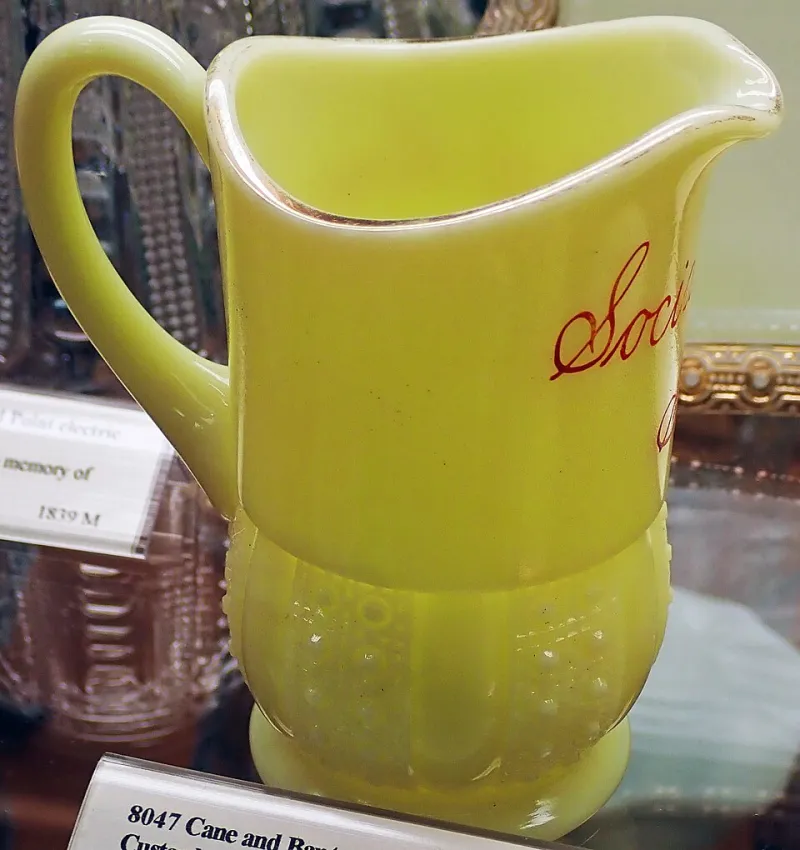
Photo: James St. John, CC BY 2.0, via Wikimedia Commons
The rain is horizontal, the fire is sulking, and there are four of us along the bar arguing about tannin. It is, by any reasonable measure, a good Tuesday. What makes it work is not the company, though that helps. It is the glassware. Four halves on the bar top, each one a different cider from a different orchard within thirty miles, each one small enough that nobody has to commit to anything.
Try the same evening in pints and it changes shape. You pick one, you commit, and by the time you fancy trying the dry sparkling one from the next valley you are already two-thirds of the way down a glass of something else and the evening has lost its curiosity.
The pint is a habit, not a law
We treat the pint as though it were handed down on stone tablets. It is not. It is simply the measure everyone reaches for because everyone else reaches for it, and because ordering a half in a strange pub still feels faintly like an apology. That is a shame, because a half is a perfectly respectable, perfectly legal, perfectly sensible way to drink cider — and in a house that takes orchard fruit seriously, it is often the more intelligent choice.
The pint suits beer, where you generally know what you are getting. Cider is a different animal. Two bottles from neighbouring farms can taste like different drinks altogether: one all bruised apple and softness, the next sharp as a wet slate and full of grip. Committing to 568ml of something you have never met is an act of optimism. A half is a handshake.
What a half lets you do
Let us count the ways.
A half lets you taste across varieties rather than across evenings. Dabinett for depth, Kingston Black for backbone, Yarlington Mill for that warm, almost honeyed weight, Foxwhelp if you fancy being told off by a glass. It lets you move from a dry, bone-white sparkling to a still, cloudy, farmhouse thing without feeling like you have wasted anything. It lets you try the perry, which is always the most interesting bottle on the bar and always the one nobody orders a pint of.
It also lets the whole table join in. The driver, the one on antibiotics, the one up at six with a small child, the one who simply does not want very much — all of them can sit with a half in front of them and not feel like the awkward one nursing a lime and soda. Conviviality is not measured in volume. It is measured in whether everyone has something worth talking about in their glass.
Better arithmetic for small orchard producers
Here is the practical argument, and it is the one I care about most.
A small maker pressing a few tonnes of bittersweet apples cannot always supply a pub with six different casks. What they can do is supply a keg, a bag-in-box, or a run of bottle-conditioned halves — and a bar that lists a dozen halves sells far more diversity than a bar that lists three pints. The customer who tries a half and loves it walks out with a bottle or three under their arm. That is a better outcome than a single pint and a shrug.
There is less waste in it too. A half-poured trial of something odd and wonderful costs the cellar far less than a pint pulled for a curious customer who does not get on with it. And a house that keeps its lines turning over is a house serving fresher cider, which is the whole point.
Drinking less, and enjoying it more
Much of the best cider in Britain sits between three and five per cent, which means two halves across an evening is roughly one pint of alcohol and rather more than one pint of interest. You get the second flavour, the second conversation, the second look at the chalkboard — and you still walk home in the dry.
That is the sustainability argument in its truest form. Not hair shirts and lectures, but a bar built so that the moderate option is also the interesting one. A half-pint of something grown a few miles away, made by people who know their trees by name, is a smaller footprint and a bigger pleasure than two pints of something anonymous. Local fruit, local pressing, local drinking, less of it, better chosen. There is no contradiction in that. It is the whole idea.
Making the half normal again
None of which happens on its own. It takes a few small decisions behind the bar.
List the halves properly on the board, with the apple varieties and the percentage, not just a name and a number. Serve them in a glass that actually suits them, because a half in a shrunken pint pot always looks like a punishment. Price them fairly, without the petty surcharge that makes a smaller serve feel like a fine. And train the staff to offer a tasting board without being asked — three halves, three orchards, a few notes on the chalkboard, and a bit of chat.
As customers, we have one job: order the half without explaining ourselves. No preamble, no apology, no 'I'm driving, sadly'. Just the half, please, and a question about the apple.
A half-pint is not a lesser pint. It is a different idea of what a cider house is for. Not a place to get through a measure, but a place to work your way slowly through an orchard, one small glass at a time.