Sloes, Rosehips and the Last Ceps: A November Forager's Ledger
Photo: foraged sloes rosehips and crab apples in a wicker basket with autumn hedge, via i.pinimg.com
There is a fortnight in early November when the British hedgerow stops being scenery and starts being a larder. The blackberries are over, the elder is bare, and everything left standing has a job to do. Sloes gone dusky and soft-skinned. Rosehips glowing like small traffic lights. Crab apples hanging in tart little clusters that nobody planted and everybody ignores. If you walk the same lane every week, you can watch the whole thing ripen in about ten days.
This is the point in the year when the orchard and the hedgerow start speaking the same language. Both are full of fruit that is too sharp, too tannic or too sour to eat raw, and both reward a bit of patience and a pan. Cider makers have known this for centuries. Foragers are just catching up.
Reading the hedge in November
A quick survey of what is worth carrying a bag for right now.
Sloes — the fruit of the blackthorn, and the single most useful thing in the hedge this month. Traditionally picked after the first frost, though that rule matters less than people claim; fruit that has darkened and softened on the branch is ready. They are almost unbearably astringent raw. Cooked or steeped, they turn almondish, plum-dark and deeply savoury.
Rosehips — dog rose and sweet briar, the fat oval ones. Best after a frost, when they soften and sweeten slightly. They are loaded with pectin and vitamin C, and they make the most beautiful coral-coloured syrup you will ever pour over a pudding.
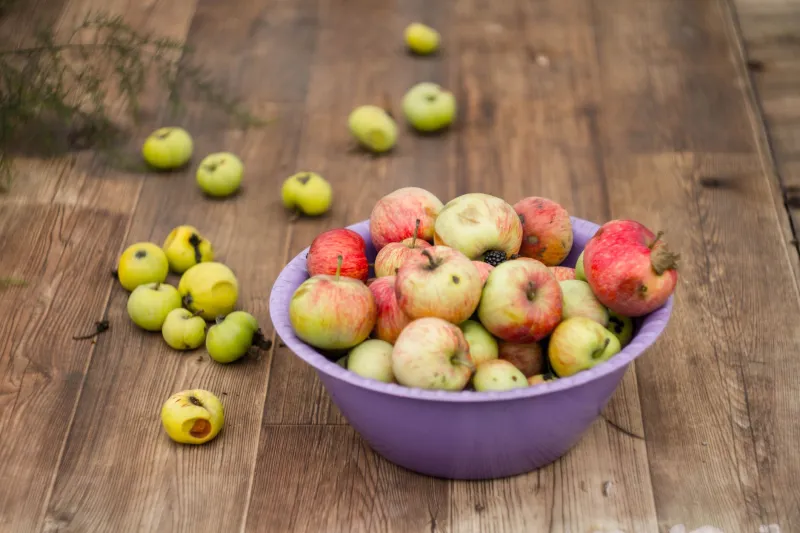
Crab apples — small, hard, mouth-puckering, and a gift to anyone who preserves. High in pectin, high in acid, and often free for the taking from a verge or an old field boundary.
Mushrooms — the last flush of the year, if the weather is kind. Field blewits and wood blewits, hedgehog fungus, the odd late cep. This is the one category where I will not be breezy: only pick what you can identify with total confidence, and never eat anything you are not certain of. A good field guide, a second opinion, or a local foray group is worth more than any article.
The rules of the game
Forage the verge, not the nature reserve. Take a third and leave two-thirds, so the birds and the next forager get a look in. Ask permission on private land — most farmers say yes if you ask properly and shut the gate. Avoid busy roadside hedges where exhaust and spray do the seasoning. Wash everything. And carry a proper basket or a cotton bag rather than a plastic tub, because fruit that can breathe comes home in better shape.
Beyond that, the main rule is restraint. A kilo of sloes is a winter's worth of preserving. Two kilos is a small industry and a sore back.
Sloes: the workhorse of the wild larder
The obvious use is sloe gin, and it is obvious because it works. Fill a jar two-thirds with pricked sloes, add sugar to taste and a decent gin, and leave it somewhere cold and dark until Christmas. But the sloe does more than that. Simmered with a little sugar and a splash of water, it makes a thick, dark compote that eats beautifully with game, aged cheese or a spoonful of yoghurt. Steeped in cider vinegar for a month, it becomes a shrub that will liven up any number of things.
My favourite use, though, is a sloe and cider braise. The astringency cuts straight through fatty meat and leaves a gravy with real depth — the sort of thing that tastes like it took all day when it took an hour and a half.
Rosehips and crab apples: pectin, colour and sharpness
Rosehips need care. Halve them, scoop out the hairy seeds and rinse well, or you will be itchy for a week. Simmered with water and strained through muslin, they give a syrup that is wonderful spooned over rice pudding, stirred into a cider-based sauce, or simply taken by the spoonful when the weather turns.
Crab apples are the quiet hero of the pair. Chop them whole — no peeling, no coring, the pectin lives in the skin and core — and simmer with water until collapsing. Strain overnight through a jelly bag, then boil the liquid with sugar at roughly 450g per 600ml until it sets. The result is a sharp, pale amber jelly that belongs on a cheese board next to something cloth-bound and salty, or melted into a pan sauce for pork.
Three plates to put it all on
Cider-creamed mushrooms on toast. Fry a good handful of field blewits or hedgehogs in butter until their water has gone, season, then splash in a dry cider and let it reduce by half. Add a spoonful of crème fraîche, stir, and spoon over thick sourdough toast. A dry, still, tannic cider alongside.
Sloe-braised shoulder of venison. Brown the joint, soften onions and carrots in the pan, add a jar of sloe compote, half a bottle of medium cider and a bay leaf. Cover and cook low for two hours until it pulls apart. The sauce wants nothing more than a spoon of crab apple jelly stirred in at the end.
Rosehip syllabub with crab apple compote. Whip cream with a little sugar and a generous glug of rosehip syrup, spoon into glasses and top with sharp crab apple compote. Serve with a bottle-conditioned sparkling cider, bone dry, slightly chilled.
The orchard-to-hedge connection
What all of these have in common is the thing the cider house has always understood: fruit that is unpleasant raw can become extraordinary with heat, sugar, acid and time. Sloes and crab apples are the wild cousins of the bittersharp cider apples in the orchard, and they behave the same way in a pan.
So walk the lane before the frosts finish the job. Bring back a bag of something sour, and see what a slow afternoon and a bottle of local cider can do with it. The hedge has been doing this for a very long time. It is only polite to join in.