A Pantry With Stools: Twelve November Staples Behind the Cider-House Bar

Photo: Trevor Rickard, CC BY-SA 2.0, via Wikimedia Commons
November is the month the bar stops pretending to be a cocktail cabinet and admits it is a pantry with stools. At The Old Cider House, the larder is not one gleaming fridge. It is shelves of jars, a cool corner for cheese, a crock of pickles, a basket of orchard odds and ends, and a notebook of what needs using first. It is practical, a little scruffy, and deeply seasonal.
That matters because the winter menu is not written in isolation. It grows out of what is already here: the glut of apples from a neighbour's garden, the last wedge of a cloth-bound cheddar, the jar of pickled walnuts that has been quietly maturing since autumn. A tightly stocked larder is not about restriction. It is about knowing what you have, using it well, and keeping the people who grew or made it on the table.
The Bar as a Working Pantry
A good cider-house larder is built for dark afternoons. People come in wet, hungry and not entirely sure what they want. They want something sharp, something warm, something to go with a pint of cider or a glass of perry. The larder answers those questions before the kitchen has to. It also cuts waste, because preserving is simply another word for planning ahead.
We buy small and often. That means flexible orders from local cheesemakers, growers and bakers, and a menu that can shift when a delivery is smaller than expected. It means cheese rinds go into soup, stale bread becomes crumbs, and apple cores are not automatically rubbish. None of this is glamorous. It is just how a sensible larder works.
The Preserving Shelf
1. Orchard preserves. Apple butter, crab apple jelly, quince paste when we can get it. These are the jars that turn a cheese board into a proper winter plate. They also soak up the orchard gluts that would otherwise go to waste. A spoonful of apple butter beside a sharp cheddar is worth more than a paragraph of menu description.
2. Cider vinegar. We keep a big jar of it behind the bar and use it for dressings, pickles and the sort of sharp-sweet sauces that cut through a rich pie. It is one of the quiet workhorses of the kitchen: local, useful and endlessly forgiving.
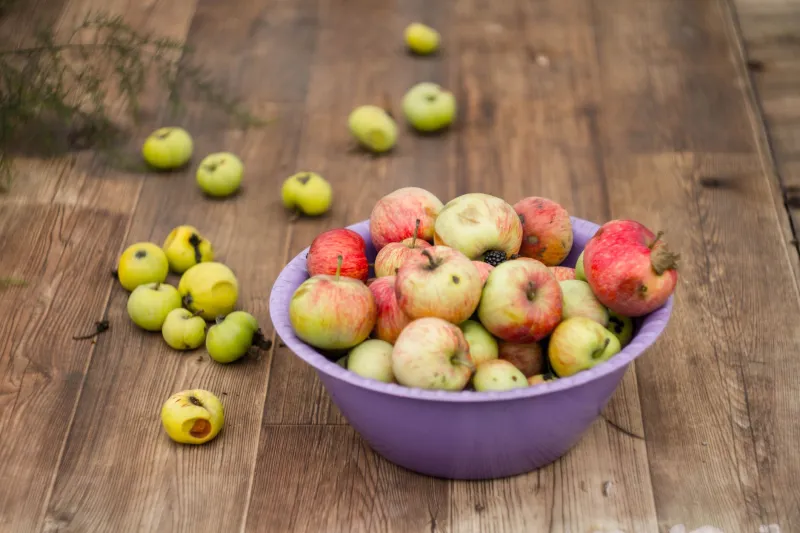
3. Last-of-the-crop apples. Egremont Russet, Bramley, a few Dabinett for character. Some go into chutney, some into a tarte fine, some sit in a bowl by the till because people like to take one with a chunk of cheese. The bruised ones are not a problem. They are tomorrow's sauce.
The Cheese and Cold Board
4. Local cheeses. A cloth-bound cheddar, a soft cow's milk cheese, something blue and salty. We keep them small and rotate them. The board changes through November, which is good for customers and good for makers who cannot supply a hundred identical wedges every week.
5. Local charcuterie. A little cured pork, a potted meat, maybe a smoked sausage from a farm within reasonable driving distance. It gives the board depth without pretending we are a charcuterie bar.
6. Bread and oatcakes. A local bakery loaf, cut thick; oatcakes for the cheese; perhaps a few crackers for the pickle jars. Stale bread becomes crumbs for a gratin or a pudding. Nothing dramatic, just sensible.
The Pickle Crocks
7. Pickled shallots. Sharp, sweet and essential beside a ploughman's. They are also a useful way to use up a sack of shallots before they turn.
8. Pickled walnuts. A proper November pleasure. Dark, vinegary and a little strange in the best way. They persuade people to try something they might otherwise ignore.
9. Beetroot in cider vinegar. Earthy, bright and good with cheese or cold meat. The vinegar turns a humble root into something that looks like it belongs on a bar counter.
10. Sauerkraut and other ferments. A jar of kraut, maybe a fermented chilli or a brine for dressing. Ferments keep the larder alive and give winter plates a lift without imported citrus or out-of-season tomatoes.
The Small Jars and Nuts
11. Cobnuts and walnuts. British nuts are a November treat. We keep them in small bowls, crack them behind the bar, and use any leftovers in a salad or a cake. People linger over a bowl of nuts in a way they rarely linger over a packet of crisps.
12. Local honey and mustard. A pot of honey from a nearby hive, a strong mustard, a little cider syrup. These are the small condiments that finish a plate. They also make excellent last-minute gifts when someone asks what to take home.
How the Larder Shapes the Menu
In November, the menu leans on the larder rather than fighting it. There is soup made from squash, apple and a little cider. There is a pie with roots and bacon, served with pickled shallots. There is a cheese toastie with apple butter, and a board that changes depending on what the cheesemaker had ready. The kitchen is not trying to invent a new cuisine every week. It is trying to make the most of what is good now.
The bar staff use the larder too. A regular who wants something sharp with a pint gets a few pickled walnuts. A dog walker who needs a quick lunch gets a bowl of soup and bread. Someone who cannot decide gets a small plate of cheese and apple. The larder makes those small decisions easy, which is half the battle behind a busy bar.
Keeping Small Producers on the Table
A larder like this keeps small UK producers in the conversation. We can buy a few wheels of cheese, a box of apples, a crate of shallots, a jar of honey. We can put the maker's name on the board and tell the story when someone asks. We can pay a fair price for something that might otherwise be too small or too awkward for a bigger buyer.
It also keeps the menu honest. If the apples are small, the chutney is small-batch. If the cheese is running low, the board changes. If the walnuts are ready, the pickle goes on. That is not a compromise. It is the whole point of a cider-house larder: good things, used well, shared with people who have come in from the cold.