Pears, Patience and a Proper Pour: Giving Perry Its Place at the Cider-House Table
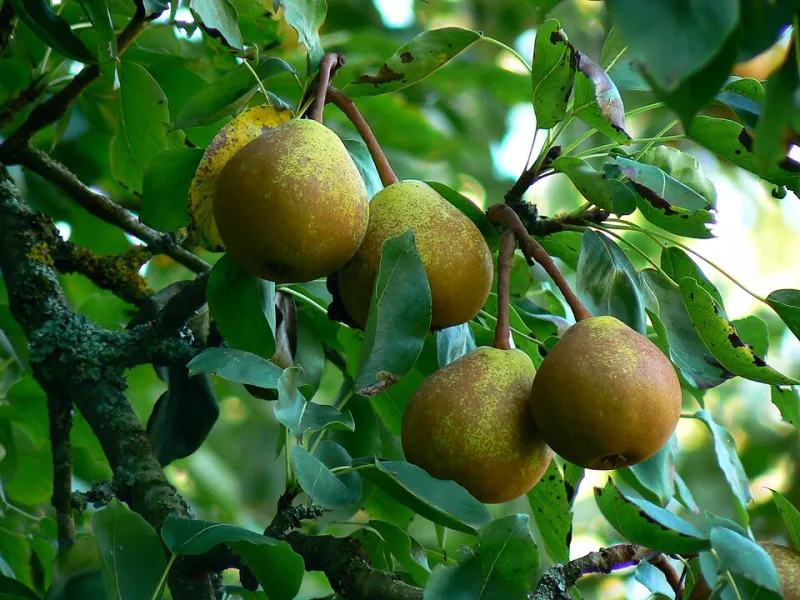
Photo: Brian Robert Marshall, CC BY-SA 2.0, via Wikimedia Commons
There is a particular kind of hush that falls over a cider-house table when someone orders a perry. Not a disappointed hush. More the pause of a room realising it has forgotten something lovely. The pints are pulled, the crisps are opened, and then a glass arrives: pale gold, maybe a little hazy, smelling of pear skin and wet stone and something faintly floral. Someone says, “Go on then, what’s that?” And the answer is not pear cider. Not really.
Here at The Old Cider House, we love a good apple. But the pear has been standing patiently by the door for far too long. Perry deserves its own chair, its own glass, and a proper place in the conversation.
What Perry Is — and What It Isn’t
Real perry is fermented pear juice. That sounds simple, and in one sense it is. But the pears matter enormously. Perry pears are not the soft, juicy dessert pears you slice into a cheese board. They are small, hard, often tannic, sometimes mouth-puckeringly astringent, and grown specifically for drink. They bring body, perfume, acidity and a gentle grip that dessert fruit simply cannot reproduce.
Much of what is sold as “pear cider” is a different creature: a fermented apple or pear base, often sweetened, often flavoured, and usually built to be easy and cold and fizzy. There is nothing wicked about that. It has its place at a summer barbecue. But it is not perry any more than a flavoured yogurt is a farmhouse cheese.
Proper perry can be still or sparkling, dry or off-dry, light or remarkably full. It can taste of lemon peel, almond, blossom, damp hay, ripe pear drop — though not in the artificial sense — and sometimes a whisper of smoke or spice. Good perry has a quietness to it. It does not shout. It asks you to lean in.
The Old Pears of the Three Counties
Herefordshire, Worcestershire and Gloucestershire hold some of the oldest perry pear heritage in Britain. Varieties such as Butt, Blakeney Red, Gin, Moorcroft, Arlingham Squash and Thorn have been grown in these counties for centuries, often in traditional orchards alongside apples and cider fruit. These are not supermarket names. They are local names, field names, family names, names that survived because someone kept grafting and planting and pressing.
Old perry orchards are also quiet wildlife engines. Standard trees, hedgerows, unsprayed grass, fallen fruit and dead wood make room for insects, lichens, birds and small mammals. A perry pear tree can live for a very long time, and an orchard planted for drink is also an orchard planted for the landscape. That feels increasingly important in 2026, when so many small food and drink decisions are really land-use decisions in disguise.
The tragedy is that perry pears are not always convenient. They are often biennial croppers, awkward to harvest, hard to press and slow to mature. Some varieties are so tannic that a first taste makes you pull a face. But patience is the point. Perry is not a drink for the impatient.
Why Small Makers Are Returning to the Pear in 2026
Across the Three Counties and beyond, small cider makers are quietly planting and replanting perry pears. Some are doing it for biodiversity. Some are doing it because they inherited a few old trees and felt a duty to them. Some are doing it because, frankly, they tasted a proper dry perry once and never quite got over it.
The best small makers are treating perry as a drink in its own right, not an also-ran to cider. They are fermenting slowly, blending carefully and releasing perry when it is ready rather than when the calendar demands. They are also talking honestly about the difference between perry and pear cider, which helps everyone behind the bar ask better questions.
This is not nostalgia for its own sake. It is orchard sustainability with a glass in hand. Every time a pub puts a real perry on the bar, it makes a small case for old trees, mixed orchards and slower fruit. That is a very cider-house sort of argument: good company, good land, good drink, all in the same round.
At the Table: Food That Meets Perry Halfway
Perry is a generous food partner because it has both freshness and gentle weight. A dry, still perry with a bit of tannin is lovely with salt-baked celeriac, leek and potato soup, or a simple omelette with herbs. It can handle roast pork with apple and sage, a chicken and cider pie, or a plate of game terrine without being overwhelmed.
Cheese is a happy meeting. Try a dry perry with a mature farmhouse Cheddar, a buttery Lancashire or a soft goat’s cheese. The pear’s acidity cuts through richness, while the tannin gives the cheese something to push against. A sweeter perry can step in with blue cheese or a pear and almond tart, but keep the sweetness in check — we want a partner, not a pudding wine wearing a flat cap.
On a colder day, a lightly sparkling perry is a fine match for smoked fish, ham hock croquettes or a plate of squash roasted with thyme. It also does something quietly brilliant with a pork pie. That may be the most cider-house sentence in this article, but it is true.
How to Pour It in the Cider House
Serve perry in a wine glass or a stemmed tumbler rather than a pint pot. Let it warm slightly. A perry served ice-cold loses its perfume, and perfume is half the pleasure. If it is sparkling, pour gently; if it is still, give it a moment to breathe. Offer a half-pint or a small glass, especially when someone is trying it for the first time.
And train the bar team to talk about it. “It’s made from perry pears, not dessert pears” is a useful start. “It’s dry, a bit tannic, smells like blossom and pear skin” is better. The goal is not to lecture. It is to help someone find the glass they did not know they wanted.
A Quiet Place Behind the Bar
The pear does not need to be the loudest thing on the bar. It does not need a festival, a slogan or a chalkboard shaped like a pear. It just needs a place. A bottle opened. A glass poured. A few old trees kept in the ground. A small maker given a fair price. A table willing to try something other than the usual.
In 2026, that feels like a modest but worthwhile kind of celebration. Perry is not a trend to chase. It is an orchard drink with a long memory and a soft voice. Give it a chair at the cider-house table, and it will repay you with something rarer than novelty: a proper taste of place.